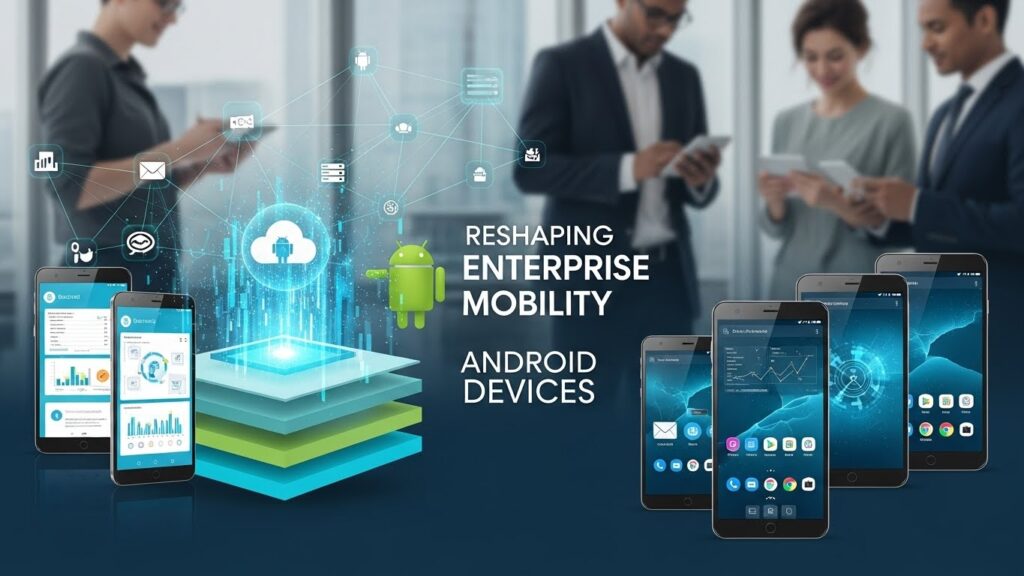
In today’s rapidly evolving business landscape, mobility has shifted from an advantageous perk to an operational necessity. Businesses of all sizes are realizing the competitive benefits of leveraging mobile technologies, with Android devices emerging at the forefront of this transformation. Enterprises are increasingly prioritizing secure, flexible, and scalable mobility solutions to empower their workforce, streamline collaboration, and protect sensitive data. By adopting robust Android enterprise mobility management solutions, organizations are not only supporting on-the-go productivity but also building resilient, future-ready infrastructures that keep pace with modern demands.
Android’s widespread adoption is no coincidence. Its open ecosystem, extensive device selection, and integration with modern workplace tools empower companies to offer both freedom of choice and robust security. With organizations striving for seamless connectivity and enhanced user experiences, Android is continuously redefining how employees engage with technology—both remotely and within traditional workspaces.
Seamless Integration with Productivity Tools
One of Android’s most important advantages in the workplace is its compatibility and deep integration with platforms like Google Workspace. Employees benefit from the ability to collaborate on documents, communicate instantly through chat and video, and synchronize data across all their devices. This eliminates barriers that would otherwise slow down project timelines and allows both in-house and remote teams to work together in real time. Android’s open platform also means it works well with popular third-party apps, further expanding its utility across industries from logistics to healthcare.
This level of compatibility underpins the creation of connected, nimble teams who can easily share information and insights, regardless of where they’re working. With ubiquitous access to productivity suites and file sharing, enterprises can respond faster to market needs and maximize employee output. For organizations looking to strengthen their technology infrastructure while maintaining operational continuity, these integrations are vital.

Enhanced Security Measures
As businesses move more operations onto mobile platforms, security becomes a critical pillar of enterprise strategy. Android’s security features, including biometric authentication, secure boot processes, and end-to-end encryption, reduce vulnerabilities and provide robust protection against unauthorized access. Frequent security updates, delivered over the air, address potential threats swiftly and ensure devices remain compliant with ever-changing enterprise standards.
IT departments further benefit from the centralized controls provided by advanced Android management platforms, making it feasible to implement organization-wide policies around app permissions, device restrictions, and email security. Android’s ongoing investment in security innovation has helped many businesses meet even stringent data protection requirements such as those outlined by GDPR and HIPAA.
Flexible Deployment Options
Every organization is unique, and Android’s versatility is reflected in its support for a variety of device deployment models. Whether a business opts for a Bring Your Own Device (BYOD) approach—allowing users to work on their personal devices—or a Corporate-Owned, Personally Enabled (COPE) model, Android adapts seamlessly. This flexibility lets IT leaders strike the right balance between control and autonomy, giving employees the ability to customize their work experience while still safeguarding corporate data.
Such adaptability is particularly valuable for organizations with diverse needs, such as those spread over multiple countries or with fluctuating contract workforces. This enables workforce-wide mobility, improves satisfaction, and supports the complex requirements of modern businesses.
Advancements in Device Management
Oversight and control are critical when deploying a mobility strategy at scale. With the advent of Unified Endpoint Management (UEM) tools tailored for Android, IT teams can effortlessly manage devices across their entire ecosystem. UEM platforms offer remote device provisioning, app deployment, configuration management, and real-time compliance monitoring—all from a single dashboard.
Centralized control doesn’t mean sacrificing the user experience, though. Employees still enjoy the freedom to use devices effectively while IT departments set guardrails to address emerging threats and ensure regulatory compliance. This approach minimizes downtime and boosts operational agility, making enterprise mobility strategies more resilient.
Support for Hybrid Work Models
The shift to hybrid and remote work has accelerated the demand for mobile-first solutions. Android devices, with their strong suite of productivity tools and powerful hardware options, are uniquely positioned to fulfill these needs. Whether employees are in the office, traveling, or working remotely, Android provides consistent user experiences, high-speed connectivity, and secure access to business applications and data.
Such empowerment is essential for maintaining productivity and morale, particularly in an era where business continuity often hinges on rapid adaptation. As noted by LinkedIn’s analysis of mobile device security best practices, companies that invest in flexible technologies are best positioned to thrive long-term.
Cost-Effective Solutions
Adopting Android doesn’t just drive performance—it can also reduce technology costs. With a wide spectrum of device choices across price points and an open-source architecture that encourages customization, Android offers solutions tailored to both enterprise needs and budgets. Organizations can equip their workforce with reliable devices without overextending IT spending.
Moreover, innovation flourishes in the open Android ecosystem, with vendors offering custom features, accessories, and management solutions that further enhance value. The result is a strategic investment that maximizes return while granting flexibility for future upgrades.
Future Outlook
The evolution of Android in enterprise mobility is only set to accelerate. With ongoing advances in artificial intelligence, machine learning, and 5G connectivity, Android devices will offer smarter automation, enhanced predictive analytics, and even faster communications. This will not only streamline existing workflows but also open the door to new business models and efficiencies yet to be imagined.
Enterprises that harness these opportunities today lay the groundwork for lasting competitive advantage—adapting quickly, delighting customers, and empowering their workforce in a digital-first world.
In summary, Android devices have secured their place at the heart of enterprise mobility strategies. Their winning combination of security, integration, flexibility, and cost-effectiveness empowers organizations to be agile, collaborative, and prepared for the future of work.